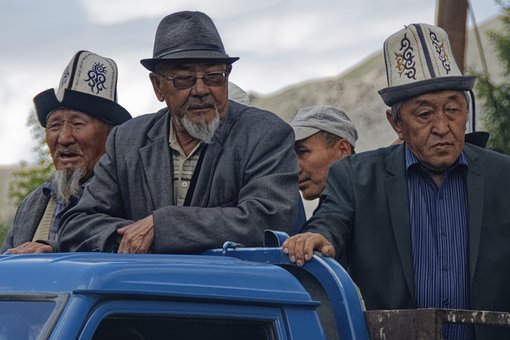
The findings of the IFSH project team fill gaps in post-liberal peace research, which seeks ways to better understand non-liberal social orders. The analysis of the collected data shows how the interplay of worldviews, everyday practices and informal institutions is understood as ‘peace from below’ and can contribute to harmony and social cohesion. However, the analyses also show how state and international power structures, as well as social change, can influence and disrupt this locally confined peace. Without romanticising, the systematisation of traditional peace practices and strategies highlights the high importance of informal networks of relationships within the extended traditional family and in neighbourhood and community networks. These relational structures strengthen social embeddedness, but also mutual interdependencies. They are relatively independent of external influences and also play a role in migration processes. Furthermore, they shape women’s capacity to act in peacemaking within patriarchal and hierarchical contexts. In socially respected settings, many women employ unseen practices of silence or facade behavior, and rely on specific women’s networks to contribute to conflict prevention, mediation, solidarity and self-organisation. As a result, some of these women not only have the means to combat early child marriage and domestic violence, but to a certain extent they also succeed in jointly overcoming economic hardship, the main cause of conflict.
Overall, the findings of the IFSH project Local Peace in Central Eurasia contribute to post-liberal peace research. Local capacities become visible when differences in traditional and Indigenous peacemaking are no longer overlooked, and the diversity of peacemaking approaches is valued more highly. Peace research should therefore strengthen its reflexivity to recognise this diversity even more effectively and understand it more deeply, moving beyond liberal blueprints. In order to truly strengthen ‘peace-in-difference’ (Behr 2018), it is also essential to develop inter-regional cooperation on an equal footing and to promote transdisciplinary and solidarity-based co-learning for peace beyond the state.
Publications of the project
Special Section Indigenous Peacemaking
Guest editor: Anna Kreikemeyer
Journal of Intervention and Statebuilding
https://www.tandfonline.com/toc/risb20/20/2?nav=tocList
- Kreikemeyer, A. (2026) ‘The Marginalization of Traditional and Indigenous Peacemaking in the Post-liberal Debate’, Journal of intervention and Statebuilding, 20(2), pp. 161-181, https://doi.org/10.1080/17502977.2025.2556070
- Kreikemeyer, A. and Romashov, V. (2026) ‘Liberal Peacebuilding and Petty Trade: Disconnects in Concepts and Practices’, Journal of Intervention and Statebuilding, 20(2), pp. 182-202, https://doi.org/10.1080/17502977.2025.2554428
- Darchiashvili, M. (2026) ‘Everyday Peace Formation from Below in Rural Georgia’, Journal of Intervention and Statebuilding, 20(2), pp. 203-224, https://doi.org/10.1080/17502977.2025.2535092
- Winch, B. M. (2026) ‘Pluriversality, Peace and Existential Continuity in Timor-Leste’, Journal of Intervention and Statebuilding, 20(2), pp. 225-244, https://doi.org/10.1080/17502977.2025.2554444
Peer reviewed single articles
Kreikemeyer, A., Darchiashvili, M. and Sheranova, A. (2026) ‘Societal peacemaking in customary contexts in Central Eurasia”, Peacebuilding, online first, 1-14, https://doi.org/10.1080/21647259.2025.2610142
Kreikemeyer, A., Darchiashvili, M. and Sheranova, A. (2026) ‘Ethnographic Perspectives on Female Peacemaking in Customary Contexts in Central Eurasia’, Central Asia and the Caucasus 27 (1), pp. 75-91, DOI: https://doi.org/10.61841/px0czz30
- Sheranova, A. (2026). ‘Ethnographic Studies of Everyday Situated Peace between Kyrgyz and Uzbeks in Osh Bazaars and Workplaces’. Central Asian Affairs, https://doi.org/10.30965/22142290-bja10082
Research report
- Kreikemeyer, A., Darchiashvili, M. and Sheranova, A. (2026). Embracing Difference in Peacemaking, DSF-Forschung kompakt+, 11 (in publication).